What is smart growth?
Smart Growth America, the nation’s premier smart growth advocacy and organization, defines it this way:
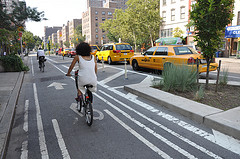
Smart growth is a better way to build and maintain our towns and cities. Smart growth means building urban, suburban and rural communities with housing and transportation choices near jobs, shops and schools. This approach supports local economies and protects the environment.
At the heart of the American dream is the simple hope that each of us can choose to live in a neighborhood that is beautiful, safe, affordable and easy to get around. Smart growth does just that. Smart growth creates healthy communities with strong local businesses. Smart growth creates neighborhoods with schools and shops nearby and low-cost ways to get around for all our citizens. Smart growth creates jobs that pay well and reinforces the foundations of our economy. Americans want to make their neighborhoods great, and smart growth strategies help make that dream a reality.
Why is smart growth important for New York State?
Much of the growth and development we have experienced across New York creates higher costs to governments and taxpayers, significant damage to our environment, and stark inequities—not to mention visual pollution and loss of historic resources. This has impacted each of New York’s unique regions.
Upstate
Upstate, land has been developed at many times the rate of population growth, with over-development creating a (often less than) zero sum game for regions. For decades, despite flat or even negative population growth, development in Upstate regions has spread outward from the cities and villages; outer suburban and rural areas have been the receiving zones for most of the new development. With this “SWOG” (Sprawl Without Growth) pattern, communities bear the costs of new infrastructure while the existing infrastructure suffers—making for higher tax burdens on government and higher taxes for the same or even fewer number of taxpayers.
Much of the new development—especially suburban and rural single-family houses– ends up generating more service costs to local government than it generates in revenue. At the same time, houses in cities and villages go vacant. Emergency services are stretched and strained by the spread out population. Commercial and retail over-development means that new big box plazas in one town kill off others in adjacent jurisdictions. Concentrated poverty and vacant properties in divested cities compound the cycle of out-migration, sprawl, and urban divestment, vacancy, abandonment, blight, beleaguered schools. People drive more (at high expense), and have less time for life; teenagers become dependent on the most dangerous activity they can undertake.
Downstate
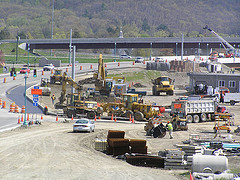
In the Hudson Valley and Long Island, populations rise rapidly and once rural communities are experiencing high demand for development. Rapid population growth in the countryside threatens character and solvency. This comes at the same time as many of the first-ring downstate suburbs experience slower growth patterns and aging infrastructure. The growth that we have already seen, and the growth that we will could continue to experience will result in a loss of farmland, open space, and historic resources. Skyrocketing costs of housing, titanic taxes, traffic and long commutes will continue to impede quality of life.
New York City
The five boroughs that constitute New York City have grown by one million people since 1990 and projections indicate that we could see a million more people living within NYC by 2035.
NYC continues to provide a one-of-a-kind urban experience. Moving forward the city must address how to continue to add population while improving the livability of the neighborhoods and city as a whole. That will mean improving access to reliable and fast public transportation, providing markets for healthy food, clean and accessible parks and recreation, as well as fresh air and water.
The Smart Growth antidote
These patterns and practices are ironic, in that many of the decisions made to improve economies and quality of life are having the opposite effects. The prevailing development pattern in New York State results in a piling on of debt, increased cost to provide infrastructure and services, and increases in property taxes often coupled with dramatic cuts in services. This is the vicious fiscal cycle that now distresses much of New York.
Smart Growth:
- Focuses limited infrastructure dollars on existing rather than redundant new infrastructure.
- Emphasizes development that “restores the cores”–cities, villages, town centers, hamlets. Vibrant cores are the foundation for healthy regions.
- Plans for land use and development inter-municipally and regionally; cooperatively rather than competitively.
- Provides choice and quality in housing, transportation, and services for a diverse citizenship.
- Ensures that air, water, wildlife, and agriculture are protected.
- Ensures that the character, culture, and heritage of communities are protected.
- Reduces vehicle miles traveled and overall energy consumption to curb carbon emissions and global climate change.
- Engages people at all life stages in the land use and development process.



 Loading ...